


Latest Posts

Where to Buy Handmade Wooden Sculptures Online in India Best Guide
Looking to buy handmade wooden sculptures online in India. This guide explores trusted platforms artisan marketplaces and tips to choose authentic handcrafted...
Sujini Embroidery Work of Bihar: Storytelling Textile Craft

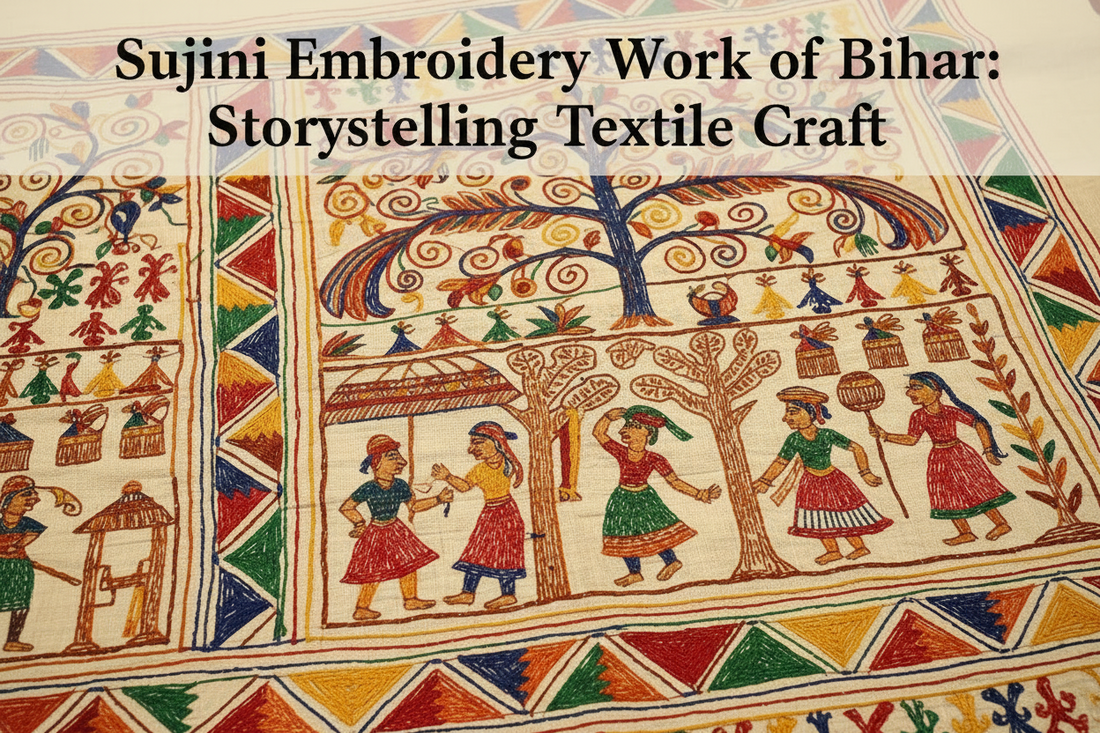
Sujini Embroidery Work of Bihar
Sujini Embroidery Work of Bihar is a powerful textile tradition that transforms needle and thread into a medium of storytelling. Practiced mainly in Muzaffarpur district, this embroidery is not only decorative but deeply expressive. Sujini reflects women’s voices, social awareness, and lived experiences through carefully stitched narratives on fabric.
Historical Background and Origin of the Craft
Sujini embroidery evolved from domestic quilting traditions practiced by rural women in Bihar. Originally created from old cloth layers stitched together for household use, the craft gradually developed into an artistic practice. Over time, Sujini moved beyond functional textiles and became a platform for documenting social realities, cultural memories, and community concerns. The revival of Sujini as an organized craft highlighted its role as a living social document rather than mere ornamentation.

Geographical Location
Sujini embroidery is primarily practiced in the Muzaffarpur region of Bihar. The craft is deeply rooted in the rural landscape, where women artisans work collectively, often within self-help groups. The geographical setting influences the themes, color choices, and storytelling style, making Sujini a strong marker of regional identity.
Artistry and Craftsmanship
Sujini embroidery is characterized by fine running stitches executed on layered fabric surfaces. Artisans typically use cotton threads on cotton or recycled textiles. The process requires patience, precision, and narrative planning. Each embroidered panel unfolds like a visual manuscript, where figures, symbols, and scenes are carefully arranged to convey meaning. The craftsmanship lies in balancing aesthetic harmony with storytelling clarity.

Motifs and Design Language
The motifs in Sujini embroidery are narrative in nature. Early designs focused on village life, nature, festivals, and episodes from Hindu epics. In contemporary Sujini, motifs increasingly address social and political themes such as women’s education, healthcare awareness, election violence, gender equality, and environmental concerns. This evolving design language makes Sujini unique among Indian embroideries.
Cultural and Economic Importance
Sujini embroidery plays a crucial role in women’s empowerment in Bihar. It provides artisans with economic independence while allowing them to express personal and collective experiences. Culturally, Sujini preserves oral histories and social commentary through textiles, ensuring that local narratives are recorded and shared beyond regional boundaries.
GI Registration and Legal Recognition
Sujini Embroidery Work of Bihar received official Geographical Indication recognition on 23 November 2007. The registration was granted to protect the authenticity of the craft and its regional identity. The registered applicant is the Development Commissioner (Handicrafts), Ministry of Textiles, Government of India. This recognition ensures that Sujini remains rooted in its place of origin and traditional practice.
Final Thoughts
Sujini Embroidery Work of Bihar stands as a rare example of craft as communication. It blends heritage techniques with contemporary relevance, allowing textiles to speak about society, change, and resilience. As a GI-recognized craft, Sujini continues to preserve cultural memory while offering meaningful livelihoods to women artisans.
Explore more:
Kutch Embroidery of Bengal
Phulkari Embroidery of Punjab
Traditional Wall Paintings For Home Decor Collections here.


Comments
No comments
Leave a comment
Your Email Address Will Not Be Published. Required Fields Are Marked *


Subscribe Us
Subscribe to our newsletter and receive a selection of cool articles every weeks
- Choosing a selection results in a full page refresh.
0 comments