

Animals Miniature Painting is a rich and vibrant style of Indian art that flourished in the royal courts of Rajasthan from the 16th century onwards. This intricate painting style is deeply rooted in Indian traditions and culture. It beautifully portrays themes of mythology, epics, love stories, royal life, and folk culture. The bold lines, bright colors, and intricate detailing make these paintings truly captivating.
The use of natural dyes and pigments made from minerals, vegetables, and precious stones was a hallmark of this art form. These natural materials give the painting a lasting and luminous quality, allowing the artwork to maintain its brilliance over time. Such exceptional craftsmanship adds great value to each piece.
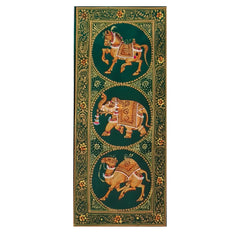
The art of Animals Miniature Painting represents an important legacy of Indian culture. The paintings often showcase animals like elephants, horses, and camels, frequently featured as central subjects. Each animal symbolizes power, grace, and royal heritage, making this style renowned worldwide.
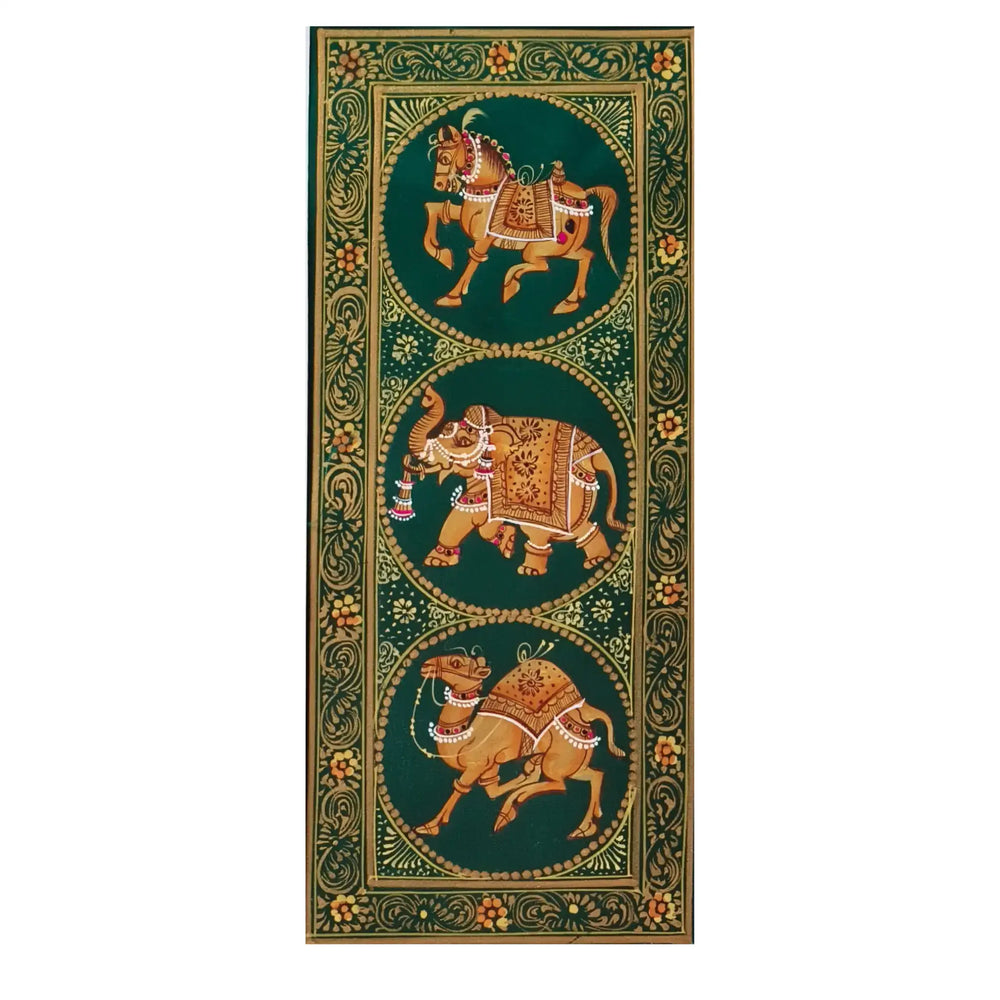
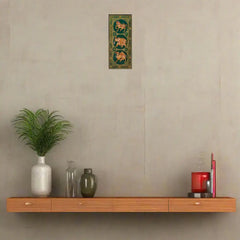
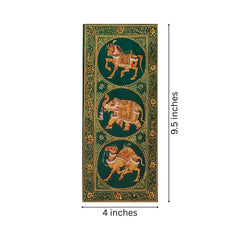
This Triptych Indian miniature art is an exquisite representation of royal animals arranged in connected panels. The depiction of the elephant, horse, and camel in a triptych format highlights a royal procession miniature painting style that was popular in Rajasthan’s courtly settings.
This traditional Indian miniature art is divided into several schools. Prominent among them are Mewar, Marwar, Bundi, Kota, Kishangarh, Bikaner, and Jaipur. Each school has its own unique style, theme preferences, and techniques that set it apart from the others.
The Kishangarh school is famous for its romantic portrayals, especially of Radha and Krishna. Iconic images like Bani Thani have become classic examples of this school’s elegant style. Meanwhile, Mewar paintings often depict court scenes, heroic tales, and religious themes, emphasizing storytelling through vivid imagery.
The traditional process of creating an Miniature Painting involves meticulous hand-painting using fine brushes. Artists employ natural pigments made from minerals, plants, and precious stones. This ensures the colors remain fresh and durable for centuries.
Gold and silver leaf are often incorporated to accentuate the royal elements and enhance the painting’s visual appeal. The delicate brushwork requires immense skill, with each stroke contributing to the intricate detailing and fine lines.
In Indian culture, royal animals such as elephants, horses, and camels symbolize strength, nobility, and status. These animals are central figures in many miniature paintings that showcase royal events and ceremonies. Their majestic presence enriches the storytelling aspect of the art.
The triptych format, with three panels showcasing these royal animals, illustrates a royal procession miniature painting. This form of painting emphasizes balance and harmony across the three connected scenes, making it a perfect expression of traditional Indian aesthetics.
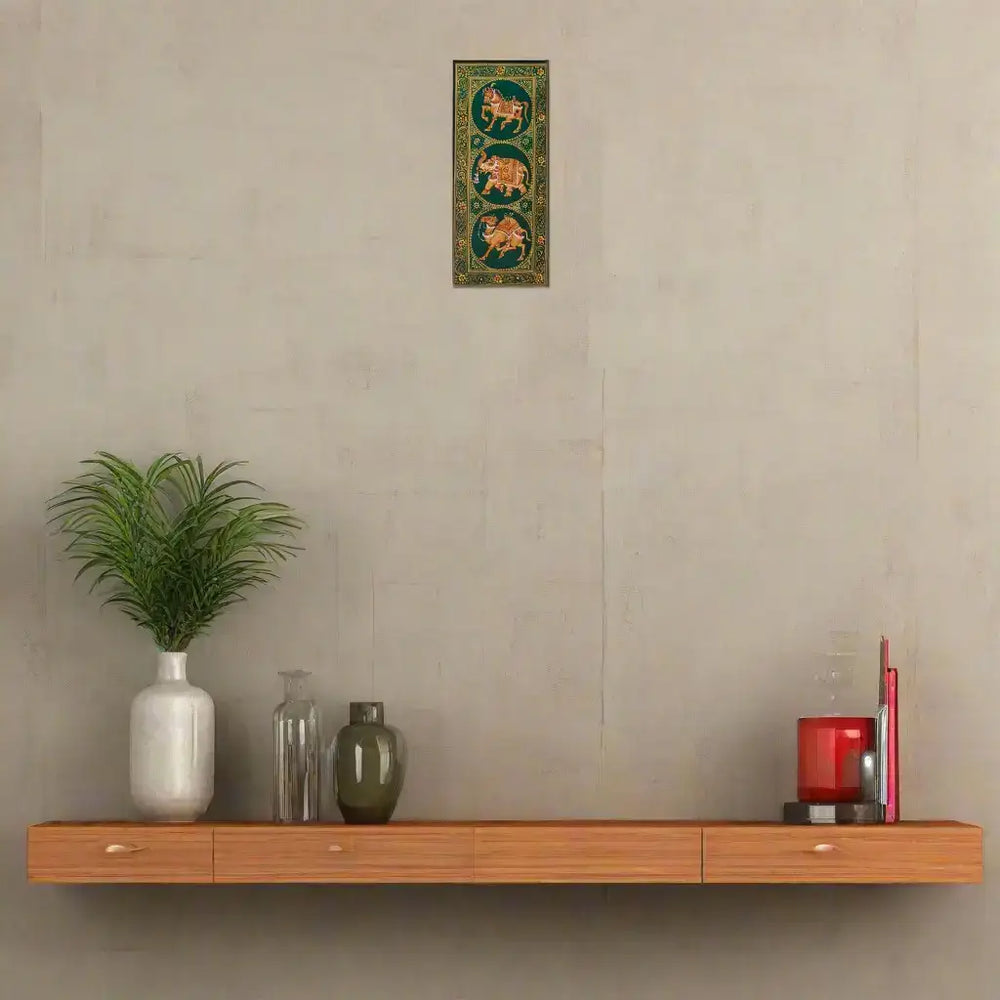
These exquisite paintings are perfect decor pieces for homes and offices. Displaying such artwork adds a cultural and artistic touch to any space. The vibrant colors and captivating themes make them conversation starters and collectors’ favorites.
Whether framed individually or combined as a triptych set, these paintings brighten up interiors and preserve a piece of Indian heritage. Artists continue to keep the tradition alive, making this art form relevant even today.
In summary, Animals Painting offers a timeless glimpse into Indian royal art traditions. Its blend of cultural storytelling, exquisite materials, and technical mastery makes it a remarkable form of expression. Collectors and art lovers appreciate its detailed portrayal of animals and royal life through this captivating Triptych Indian miniature art.
| Art Work | Rajasthan Miniature Art Work |
| Period of Practice | 16 th Centuary |
| Artist Name | Yogendra Kumavarth |
| Colour | Green and Animal |
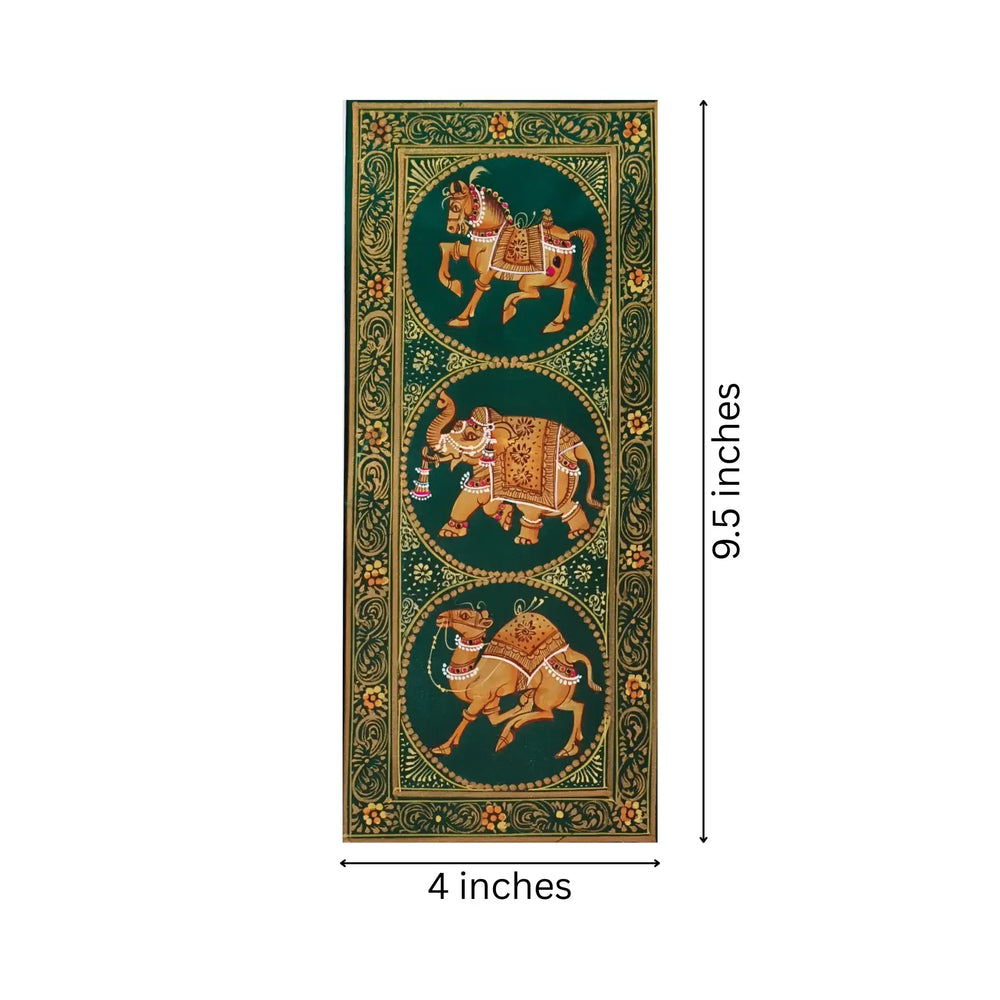
| Dimensions (H * W * L) | 9.1 in4 in |
| Decoration Material | Acrylic |
| Theme | Ethnic, Art, History, and Animals |
| Age Group | Adults |
| Shape | |
| Material | |
| Recommended Age Group | 18 years or older |
| Art Work Authenticity | Original |
| Features | |
| Frame Style | Unframed |
| Painting Medium | Natural Colours |
| GI Tagged Info | Application No. |
| Mounting Hardware | |
| Country Of Origin | India |
| Region | Rajasthan |
| Weight | |
| Volume |
You may return most new, unopened items within 7 days of delivery for a full refund. We'll also pay the return shipping costs if the return is a result of our error (you received an incorrect or defective item, etc.).
You should expect to receive your refund within four weeks of giving your package to the return shipper, however, in many cases you will receive a refund more quickly. This time period includes the transit time for us to receive your return from the shipper (5 to 10 business days), the time it takes us to process your return once we receive it (3 to 5 business days), and the time it takes your bank to process our refund request (5 to 10 business days).
If you need to return an item, simply login to your account, view the order using the "Complete Orders" link under the My Account menu and click the Return Item(s) button. We'll notify you via e-mail of your refund once we've received and processed the returned item.
We can ship to virtually any address in the world. Note that there are restrictions on some products, and some products cannot be shipped to international destinations.
When you place an order, we will estimate shipping and delivery dates for you based on the availability of your items and the shipping options you choose. Depending on the shipping provider you choose, shipping date estimates may appear on the shipping quotes page.
Please also note that the shipping rates for many items we sell are weight-based. The weight of any such item can be found on its detail page. To reflect the policies of the shipping companies we use, all weights will be rounded up to the next full pound.