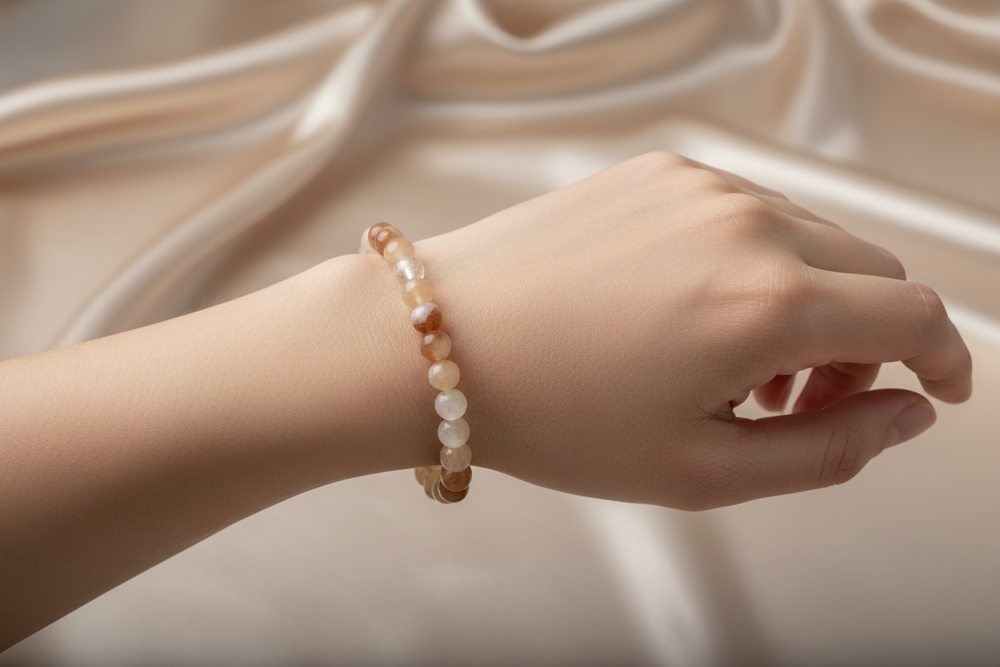
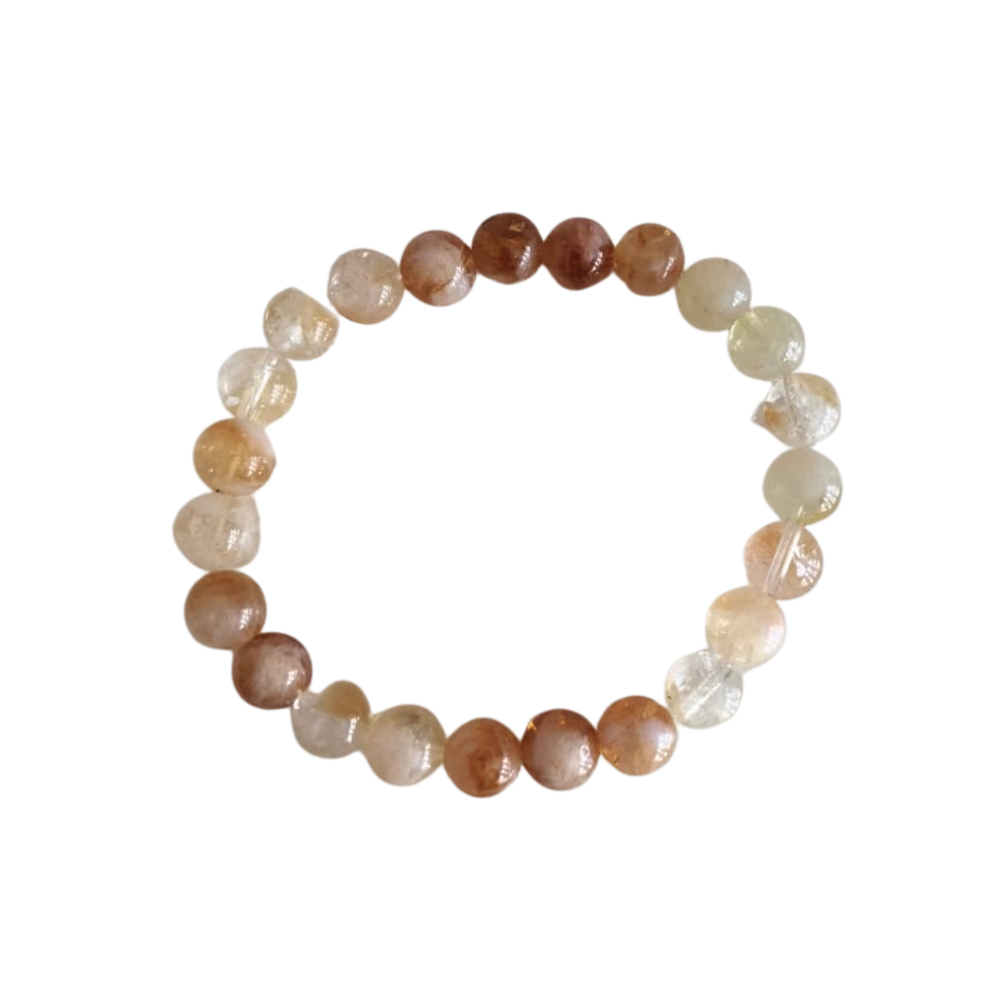
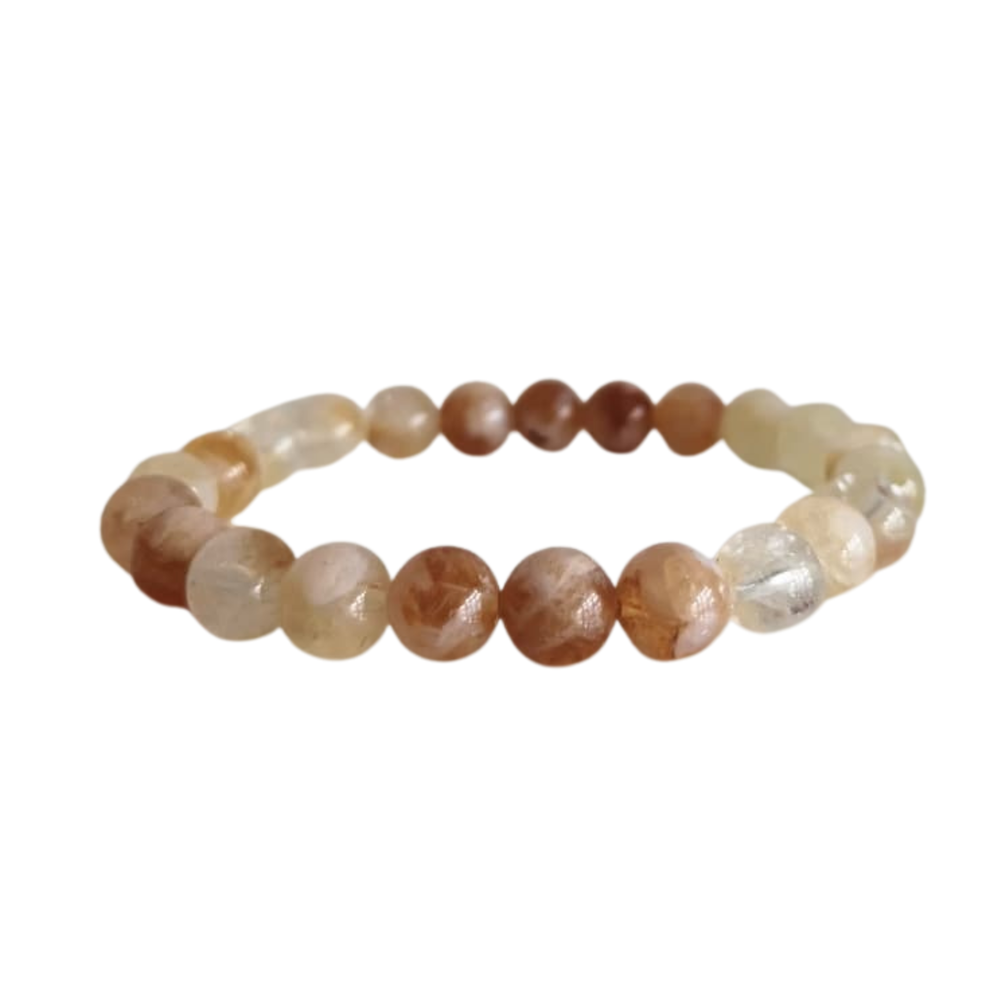
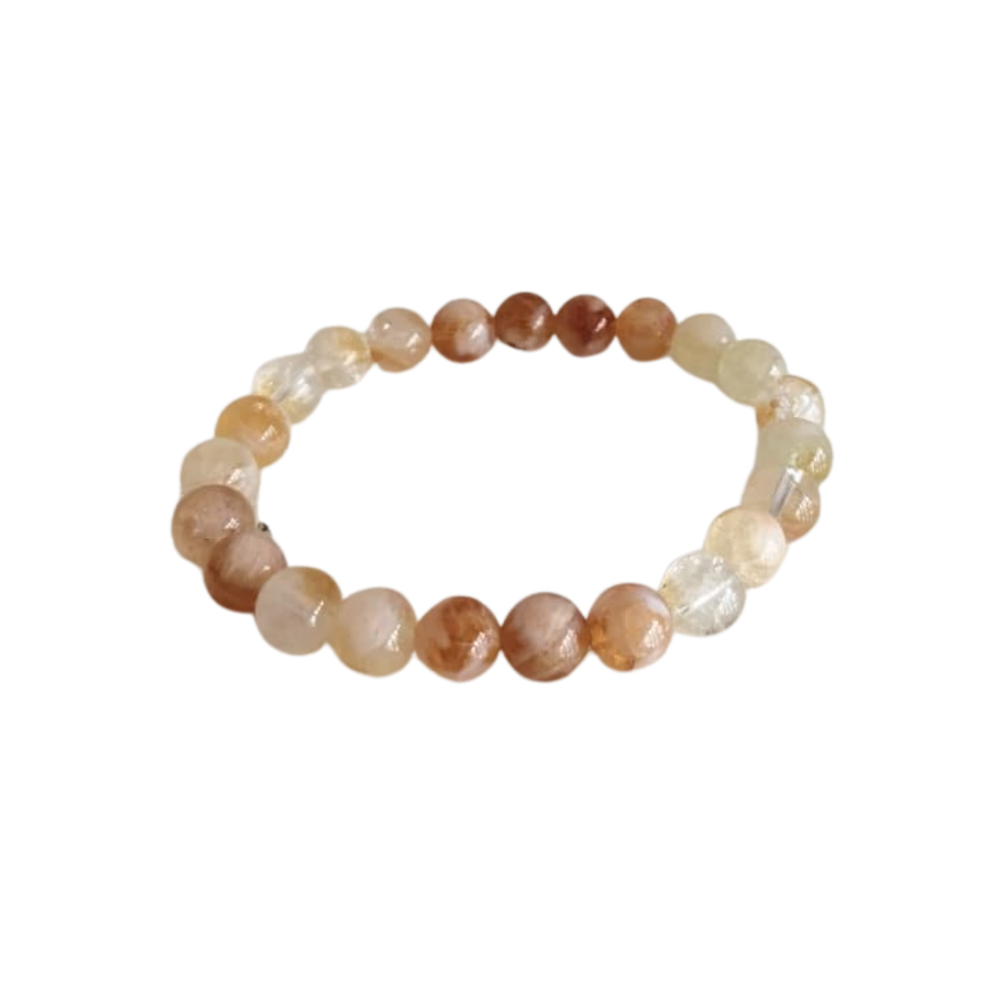
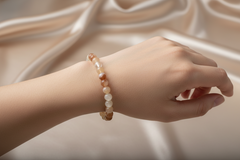
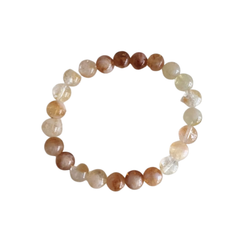
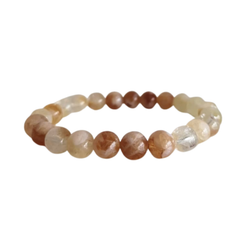
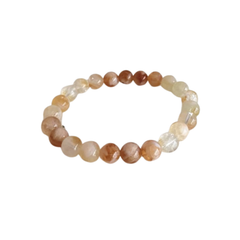




The Natural Crystal Stone Bracelet reflects the timeless beauty of Kambhat Stone Art, also known as Agates of Cambay.
This traditional craft comes from the historic town of Khambhat in Gujarat, India.
The region has been known for agate stone craftsmanship for thousands of years.
Artisans shape and polish semi-precious stones such as agate, chalcedony, and jasper into jewelry and decorative objects.
This makes each Handmade Stone Bracelet a small expression of a long artistic tradition.
Natural Crystal Stone Bracelet Heritage and Craftsmanship
Archaeological evidence links agate bead-making here to the Indus Valley Civilization.
That history makes it one of the oldest surviving stone crafts in India.
Over centuries, artisans developed techniques for heating, cutting, grinding, and polishing stones.
These methods bring out natural colors, patterns, and shine.
The stones are usually collected from nearby regions.
They are processed by skilled craftsmen using traditional and modern tools.
The brown and cream palette gives this piece the appeal of a Brown Cream Stone Bracelet with warm, grounded character.
Its soft, earthy look also suits shoppers seeking an Earth Tone Bracelet for daily styling.
As a Natural Gemstone Bracelet, it highlights the natural banding and texture valued in stone jewelry.
Many people also choose this style as a Crystal Healing Bracelet or Spiritual Bracelet.
It can also be worn as Healing Crystal Jewelry for meditation, gifting, or everyday use.
This bracelet is easy to pair with simple outfits and occasion wear.
For best wear, handle it with care.
Avoid prolonged exposure to water and chemicals.
Natural variation in color and pattern is part of its character and charm.
Historically, Khambhat was an important trading port.
Its agate beads were exported to the Middle East, Africa, and Europe.
Because of its long cultural heritage and distinctive craftsmanship, this traditional craft received the Geographical Indication (GI) Tag No. 80 in 2008.
Today, Kambhat stone art continues to support many artisan families.
It remains an important part of India’s handicraft heritage.
This piece represents a beautiful blend of natural materials, skilled workmanship, and centuries-old artistic tradition.